

Residential Flat Roofing
Residential Flat Roofing in Denver, CO
Flat and low-slope roofs on Denver homes need a membrane roofer, not a shingle crew with a bucket of coating.
Core Roofing Systems has installed low-slope membrane systems across the Denver metro since 2001 and is a certified single-ply installer for MuleHide, GenFlex and IB Roof Systems. The same crews that roof commercial buildings handle the flat roof on your mid-century home, addition, porch or garage. Every job starts with a free inspection and ends with our 5-year workmanship warranty.



Certified Installer




Why Choose Core
Why Denver Homeowners Choose Core for Flat Roofs

Certified Single-Ply Installer
We are a certified installer for MuleHide, GenFlex and IB Roof Systems. The membrane crews that roof offices and warehouses across the metro install TPO, EPDM and modified bitumen on homes, so your flat roof gets a crew that does this work every week.
Pitched and Flat, Since 2001
Most Denver houses with a flat section also have a pitched roof. We have roofed the metro since 2001 as an Owens Corning Platinum Preferred and GAF Master Elite contractor, so one company handles both parts of the house and the flashing where they meet.
Hail Claim Know-How
The Colorado Division of Insurance approves us as a continuing-education provider, and we teach the roof-claim process to insurance agents. When hail punctures a flat roof, we document the damage the way adjusters expect to see it.
Warranty and Same-Day Response
Every flat roof we install or restore carries our 5-year workmanship warranty. We work Monday through Friday from 9 to 6 and schedule active leaks the same day during business hours.
Get Started
Get a Free Flat Roof Inspection
Tell us about the roof, and an estimator will look at the membrane, the seams, the drains and the flashing, then tell you what it needs.
Contact Us
Denver Homes
Where Flat Roofs Show Up on Denver Homes
Denver has more flat and low-slope roofs on houses than most people expect. Mid-century modern neighborhoods such as Krisana Park and Harvey Park in Denver and Arapahoe Acres in Englewood were built with flat and nearly flat roofs as part of the design. In the Highlands and Berkeley, flat-roofed additions and second-story pop-tops sit on top of older bungalows. Across the metro, attached garages, porch roofs and patio covers often carry a low-slope section, and many brick two-stories hide a flat roof behind a parapet wall where you cannot see it from the street.
These roofs fail differently from shingles. A pitched roof sheds water in seconds; a flat roof holds it until it drains. Any low spot, clogged scupper or open seam collects standing water, and standing water finds every weak point. That is why flat roofs need membrane systems with sealed seams and careful flashing where the roof meets walls, parapets and the pitched sections of the house.
Systems We Install
Four Residential Flat Roof Systems We Install
Each system fits a different roof, and the right one depends on the deck, the drainage and what is up there now. The same systems cover commercial buildings across the metro; see low-slope roofing in Denver for the commercial side.
Silicone Coating Restoration
A seamless liquid membrane applied over a sound existing roof. It is the option when the deck and insulation are dry and the membrane is simply aging. It avoids a tear-off, but it cannot fix wet insulation or a failing deck underneath.
Modified Bitumen
An asphalt-based membrane, torch-applied or cold-applied, and the traditional Denver flat-roof material. It is the easiest match when only part of a roof is being redone, though it is heavier and less reflective than single-ply. More on modified bitumen roofing.
TPO
A white single-ply membrane with heat-welded seams and the most common choice for a new install. It reflects sunlight, which keeps the rooms below cooler in summer; the seams and flashing details need careful welding. More on TPO roofing.
EPDM
A black rubber single-ply membrane with a long service life. It stays flexible through freeze-thaw swings and tolerates movement well, though it absorbs more heat than a white membrane. More on EPDM roofing.
We do not pick a system from a photo. Your estimate lists the system, the fastening method and the flashing scope, and our guide explains what a roof replacement costs in Denver.
Front Range Weather
Hail, Ponding and UV at 5,280 Feet
Spring storms leave ponding water, and water that still sits on the roof a couple of days after rain points to a drainage problem. The fixes are tapered insulation to build slope into the roof, crickets to steer water around chimneys and curbs, and clean scuppers and drains.
Hail punctures membranes at seams, around penetrations and over soft insulation. A cover board under the membrane acts as the impact layer and is worth asking about on any new flat roof. For the pitched sections of the same house, see our guide to impact-rated roofing. If a storm has already hit, start with hail and storm damage roof repair in Denver.
At 5,280 feet, UV exposure is stronger than at sea level, and membranes chalk and age faster. Reflective membranes and coatings hold up better here. Freeze-thaw cycles also move the roof through the winter and put stress on seams and flashing, so we detail those areas with that movement in mind.
Our Recommendation
Repair, Coat or Replace?
A flat roof does not always need a new membrane. After a free inspection with core cuts or a moisture scan and photos of every problem area, we give you a written recommendation for one of three paths.

-
01
Repair
The right call when a seam, a flashing detail or a penetration has failed on a roof with life left in it. We fix the failure and leave the rest of the roof alone. See roof repair in Denver.
-
02
Coat
The right call when the deck is sound, the insulation is dry and the membrane is aging. A silicone coating adds years to the roof without a tear-off.
-
03
Replace
The right call when the insulation is saturated, the roof already has more than one layer, or the deck has failed. Coating or patching over those problems only traps them, so we tear off and start from a dry, solid deck.
Your Estimate
What a Flat Roof Estimate Covers
A written flat roof estimate from us spells out every part of the job so you can compare bids line by line: the tear-off scope and how many layers come off; a deck repair allowance for damaged sheathing; insulation and cover board; the membrane and its fastening method, fully adhered or mechanically fastened; flashing at parapets, walls, skylights and rooftop units; drains and scuppers; edge metal; and the warranty terms.
See low-slope roofing in Denver and our guide to what a roof replacement costs in Denver for current ranges.
Have Questions?
Frequently Asked Questions About Residential Flat Roofs
Our Service Areas
Denver Metro Roofing Service Area
We serve homeowners, property managers, and commercial clients across the entire Denver Metro region. Below are the communities where we work every week:
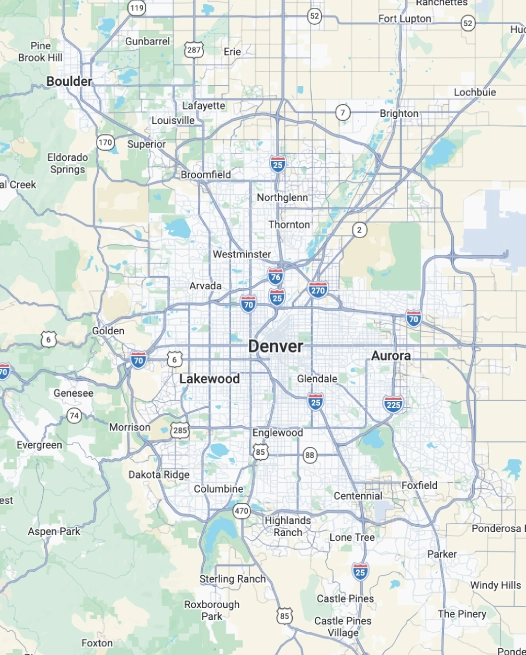
Serving Central Denver
Not sure if you’re in our service area? Call 303-295-2220 — and find out how we can help you.
Flat Roof Trouble?
Ready to Fix Your Flat Roof for Good?
Standing water, a soft spot by the drain or a stain under the addition all start small. A free inspection tells you whether the roof needs a repair, a coating or a new membrane, and our 5-year workmanship warranty covers the work we do.
“Doing It Right Matters.”